


PUBLISHED
January 04, 2026
KARACHI:
Watching 27 Nights reminded me of a newspaper article I had come across a few years ago. It was about a woman Ayesha Bibi* who lived in the Edhi Old Age Home in Karachi. Apparently, she had been abandoned by her children, after her husband passed away. “I have grown-up sons but they left me saying I have mental issues. Do I have mental issues?” she had wistfully asked the interviewer.
The reason I thought of her was because this woman in Karachi had asked the same question that Martha Hoffman asks her court-appointed psychiatrist in the film 27 Nights, set thousands of miles away in Buenos Aires, Argentina, after being admitted against her will to a mental institution by her daughters, after her husband’s death. It tells us that senior people are the same all over the world, and more or less, they have the same issues and challenges. Sad.
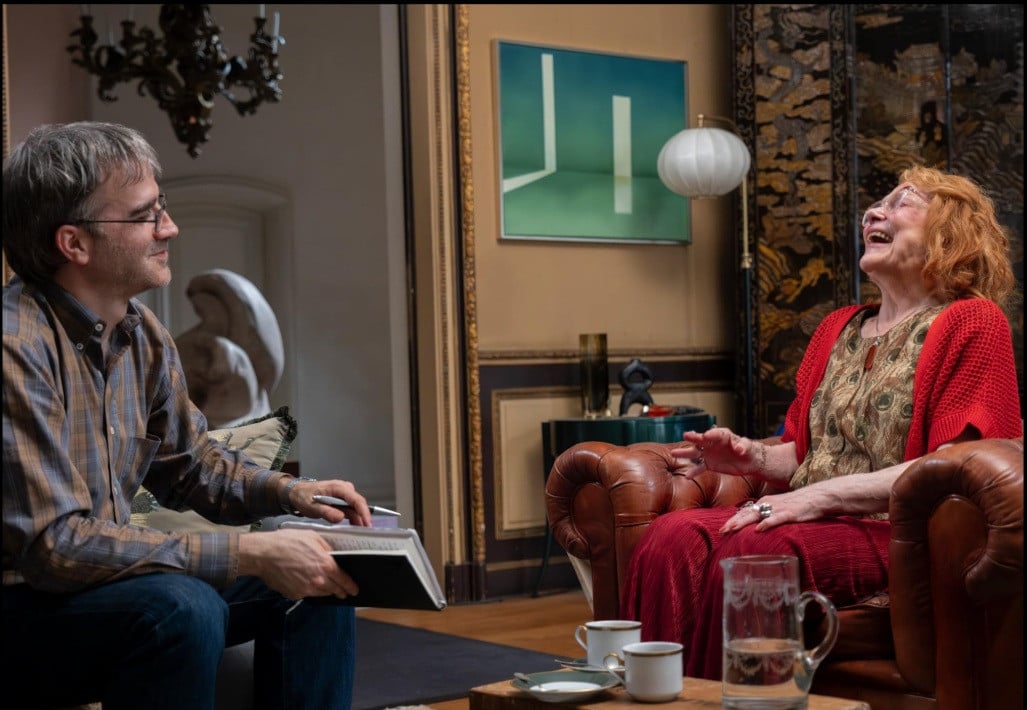
Directed by Daniel Hendler, Netflix’s 27 Nights is a Spanish-language Argentinian drama that follows Martha Hoffman, a celebrated art collector whose wealth is matched only by her fearless spirit. But her bold, adventurous lifestyle soon collides with her daughters’ anxieties — and her world unravels when she is admitted, against her will, to a psychiatric facility. What unfolds is an unflinching exploration of her mind and identity, as a court-appointed psychiatrist delves into her inner world to uncover the truth behind her actions and desires. In the process, he is forced to confront his own limitations and moral boundaries as a professional who feels that what is happening with Martha is not right. Though centred on Martha’s diagnosis and destiny, the film also highlights modern questions about autonomy, sanity, and the fragile borders between care and control.
While 27 Nights takes its cue from writer Natalia Zito’s novel of the same name, both works share a deeply personal undertone. They draw partial inspiration from the real-life story of artist and writer Natalia Kohen, whose experiences in the mid-2000s stirred widespread debate about mental health, medical ethics, and women’s agency. Written by Daniel Hendler, Mariano Llinás, and Martín Mauregui, the screenplay blends real accounts with creative interpretation to craft a narrative that is as philosophical as itis unsettling.
At the heart of the film lies the haunting true story of Natalia Kohen, who at age 86 was misdiagnosed with Pick’s disease, a form of frontotemporal dementia that impairs speech and personality. In 2005, she was forcibly admitted to a psychiatric clinic — where she spent 27 nights — an ordeal that would later inspire both the novel and the film.
Born in 1919 in Argentina’s Mendoza Province, Kohen was a scholar of literature and philosophy and a lifelong patron of the arts. After marrying industrialist Mauricio Kohen], founder of the pharmaceutical firm Argentia, she became director of the Argentia Foundation. When her husband passed away, her eldest daughter, took over the foundation’s leadership, and for nearly a decade, life followed a steady rhythm. Tensions emerged, however, when Natalia expressed her wish to help establish a local art centre — an idea that sparked conflict over finances and control.
According to reports, her daughters, began consulting a psychotherapist about their mother’s mental state, later seeking the opinion of neurologist Dr Facundo Manes. Despite legal advice warning her of potential wrongful institutionalisation, Natalia dismissed the concern only to find herself declared in urgent need of medical care and taken to the Instituto de Neurociencias in Buenos Aires.
A detailed report from July 13, 2006, recounts Natalia’s experience in the clinic. Her days were regimental, her confinement was traumatic, but her eventual resolve to fight back was admirable. From inside the institution, she contacted friends and journalists, sparking a public campaign that led to her early release. Yet freedom did not restore normalcy; back home, her movements and interactions remained monitored and tightly controlled. Determined to reclaim her autonomy, she took the matter to court, accusing Dr Manes of issuing a false diagnosis.
Her claims gained traction when the institute, where Manes worked, stated it had no record of her being evaluated there. Further inconsistencies emerged when a new certificate appeared asserting symptoms consistent with Pick’s disease. But it had been signed by Manes’s legal counsel who admitted she had never examined Kohen. These contradictions ultimately led an appellate court to rule that **Natalia Kohen did not suffer from frontotemporal dementia.
Though the dementia diagnosis was annulled, the court declared her legally incapacitated based on a new medical assessment citing symptoms of certain cognitive disorders. The ruling appointed a curator to manage her affairs, though with the notable allowance that she could spend her own funds without restriction.
Natalia Kohen lived to be 103, and passed away in 2022. In her later years, as a 2009 documentary revealed, she reconciled with her daughters and continued to be remembered as a passionate advocate for art and intellectual freedom. Her story, in this film stands as a powerful reflection on how easily care can slip into control, and how fiercely one must sometimes fight to remain the author of one’s own life.
As the film’s narrative touches upon some prevalent themes of freedom and aging, it layers them with humour as well as diverse backdrops, such as the psychiatric clinic and residences. The shooting for ’27 Nights’ was conducted, especially across Greater Buenos Aires. According to reports, principal photography for the drama film got underway in January this year and wrapped up by March.
But 27 Nights is more than a film about one woman’s confinement — it is a mirror held up to society’s uneasy relationship with aging, autonomy, and the quiet erosion of dignity that too often shadows old age.
A simple online search revealed a list of old homes in Pakistan, many of which started operations some years ago. The number of organisations is growing, along with occupancy numbers, as senior parents increasingly become a burden for their children and their families. Tragic, but real.
Edhi homes for the elderly were set up in the early 1970s and, since then, the foundation has taken care of thousands of senior citizens. Media reports indicate that just within Edhi Homes, the number of elderly persons has gone up manifold. Same is the case with Dar-ul-Sakoon Old-Age Home. In 1975, Afiyat old age home was set up by the Punjab Social Welfare Department in Lahore and now has many branches across Punjab.
Pakistan is one of only 15 countries worldwide with over 10 million older people. Despite cultural traditions of caring for the elderly, the number of cases of parent abandonment is increasing. Culturally, people are not inclined towards exercise and fitness, with age they become sick and weak, and hence a burden economically. Pension programmes, facilities and infrastructure for seniors is lacking. Does that mean being dead is better than being sick and elderly?
What is the current status of the term “Senior Citizens Welfare Bill” which refers to legislation passed in different regions, such as the Sindh Senior Citizens Welfare Act, 2014 and the Islamabad Capital Territory Senior Citizens Act, 2021? These laws establish councils and provide benefits like free or discounted medical services, assistance with pensions, and the issuance of a Senior Citizens Card to senior citizens. Apparently, Punjab is also considering a similar bill, the Punjab Senior Citizens Welfare Bill 2025. What progress have we seen in this area?
I have only seen, month after month, the sofas in the Behbud Saving Centre get softer, unfirmer and lower by the day, which are a predicament of the elderly to sit on and get up from, with aging knees. I often see that they would rather stand, leaning on their walking sticks or against the wall or counter, than sit on those sofas and couches which are way past their expiry date.
Marilú Marini, the actor who played Martha Hoffman is brilliant in her portrayal of the vivacious, somewhat eccentric, generous and free spirited woman. She has been praised for her ability to bring a sense of paranoia and vulnerability to the character, making viewers question the line between a character’s potential naivety and how much her independence should be compromised.
27 Nights must be watched — not only for its layered storytelling and emotional depth, but for the mirror it holds up to our collective neglect of the elderly. It reminds us that aging is not a diagnosis, but a continuation of living — one that deserves dignity, voice, and choice. Perhaps by watching, reflecting, and caring a little more, we can ensure that the evening of life shines with gentleness rather than loneliness.
