


The U.S. raid that captured Venezuela’s President Nicolas Maduro has sparked widespread international condemnation, with many countries and the UN Security Council denouncing it as a violation of international law and state sovereignty.
by Xinhua writers Shang Xuqian, Yang Dingdu
NEW YORK, Jan. 6 (Xinhua) — Washington has been facing sharp criticism worldwide for a Saturday raid on Venezuela and the kidnapping of its President Nicolas Maduro and his wife on Venezuelan soil.
U.S. President Donald Trump, who ordered the raid, told a press conference later that the United States will “run” Venezuela until “a safe time” for power transition, sparking fiercer denunciation worldwide.
SLAM FROM THE SECURITY COUNCIL
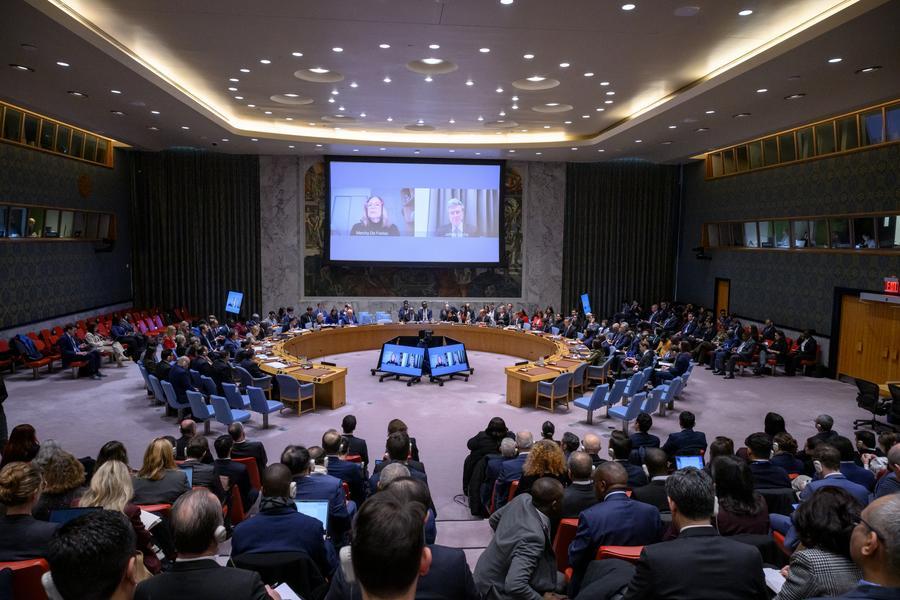
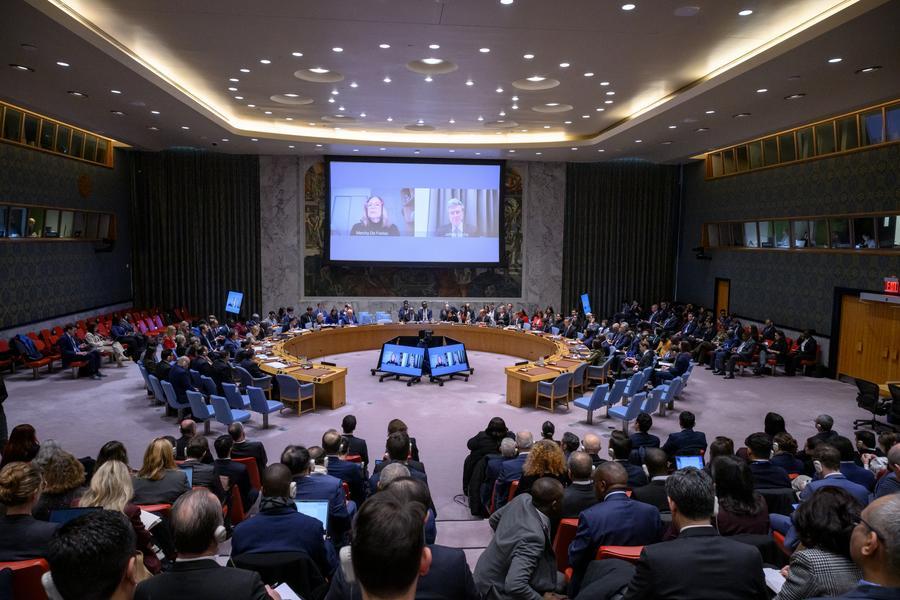
The 15-member UN Security Council on Monday called an emergency meeting over the U.S. military operation against Venezuela, as requested by Colombia, a council member and Venezuela’s neighbor, and by the Venezuelan government in a letter sent on Saturday.
Council members, including China, Colombia, Russia, as well as Brazil, Chile, Cuba, Iran, the Non-Aligned Movement and the Group of Friends in Defense of the Charter of the United Nations, condemned the U.S. move as a blatant violation of the UN Charter, while more countries and international organizations stressed the importance of respecting international law and the UN Charter, which prohibits the use or the threat of use of force against the territorial integrity or political independence of any state.
Denouncing the U.S. move, Colombian Ambassador to the United Nations Leonor Zalabata Torres said such actions constitute a serious violation of international law and the UN Charter, including the principle of respect for sovereignty and the full authority of states over their territory, including their natural resources.
“Defending these principles is not an option. Indeed, it is a common obligation that we have in order to preserve international peace and security,” she said.
Russian UN Ambassador Vassily Nebenzia said Russia firmly condemns “the act of armed aggression by the United States against Venezuela in breach of all norms of international law.”
He said the U.S. move was seen by many as a harbinger of a return to an era of lawlessness and a U.S. domination by force, chaos and injustice, which will inflict suffering on countries in various regions of the globe.
“Washington is generating fresh momentum for neocolonialism and imperialism,” Nebenzia said, calling for global unity in a resolute rejection of U.S. military foreign policies as demonstrated in the case of Venezuela, which, according to him, sounds an alarming bell to all countries.
“Failing to hear this today is tantamount to showing cowardice and the lack of principles, thus essentially blessing further encroachments on international law and simply rejecting civilized conduct in interstate relations,” he warned.
China is deeply shocked by and strongly condemns the “unilateral, illegal, and bullying acts” by the United States, said Sun Lei, charge d’affaires of China’s Permanent Mission to the United Nations.
“The United States has placed its own power above multilateralism, and military actions above diplomatic efforts, posing a grave threat to peace and security in Latin America and the Caribbean, and even broader international peace and security. China firmly opposes this,” Sun said.
China urges the United States to abide by international law and the purposes and principles of the UN Charter, he said.
Both Russia and China urged the immediate release of Maduro and his wife.
At the Security Council meeting, Christina Markus Lassen, Danish ambassador to the United Nations, stressed, “The inviolability of borders is not up for negotiation.”
“No state should seek to influence political outcomes in Venezuela through the use or threat of force, or through other means inconsistent with international law,” she said.
“The military operation that led to the capture of Nicolas Maduro contravenes the principles of peaceful settlement of disputes and non-use of force,” Jay Dharmadhikari, French deputy ambassador to the United Nations, noted.
Such a violation of the UN Charter and international law by the United States as a UN Security Council permanent member “undermines the very foundations of the international order,” he said.
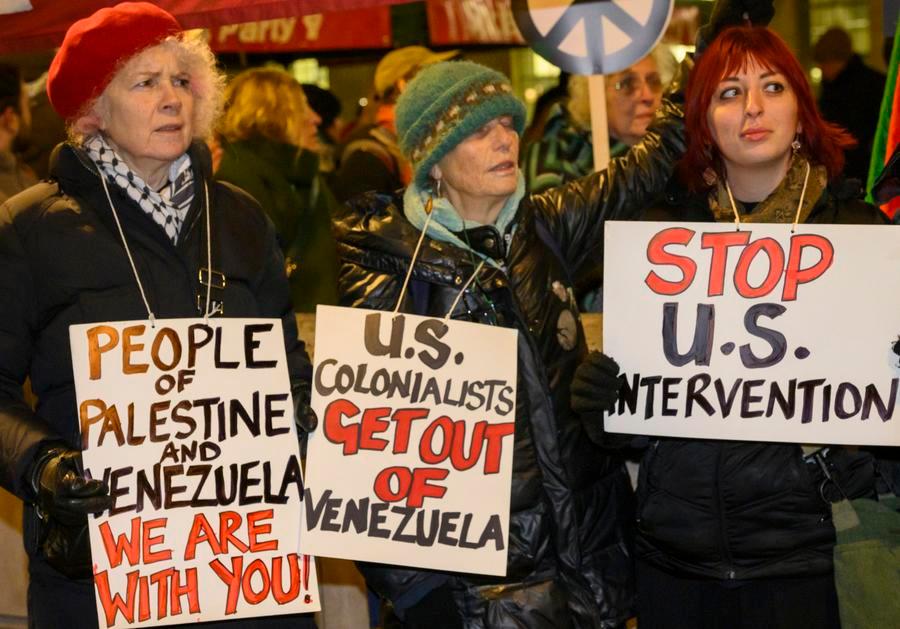
“When countries ignore the UN Charter and act contrary to its central premise, it undermines the credibility of the entire system in which we all undertake our international relations,” Jonathan Passmoor, South Africa’s acting deputy permanent representative to the United Nations, said at the meeting.
“Failure to act decisively against such violations is tantamount to inviting anarchy, and normalizing the use of force and military might as the main form of discourse in international politics,” he added.
GROWING CONCERNS AROUND THE WORLD
Grave concerns over the U.S. operation against Venezuela have been growing across the world these days.
Iran’s foreign ministry on Saturday condemned it as an “act of aggression” in clear breach of international law and the UN Charter, as well as a “flagrant violation” of Venezuela’s state sovereignty and territorial integrity.
Indonesia expresses its grave concern over any actions involving the use or threat of force, which risk setting a dangerous precedent in international relations and could undermine regional stability, peace, and the principles of sovereignty and diplomacy, the Indonesian foreign ministry said in a statement on its official X account late Sunday.
In the statement, Jakarta also joined the calls by many countries for restraint, de-escalation and respect for international law.
The U.S. risky move has highly alerted regional countries in Latin America. Brazilian President Luiz Inacio Lula da Silva said it “crossed an unacceptable line” and set a dangerous precedent. Chilean President Gabriel Boric said, “Today it’s Venezuela, tomorrow it could be anyone else.”
A report published Sunday by Bosnia and Herzegovina’s Klix news portal, after a review of U.S. military strikes on countries ranging from Iran to Yemen over the past year, said, the U.S. administration “has redefined the meaning of ‘peacemaking.'”
For Washington, “peace does not mean the absence of conflict, but the absence of resistance to American will. In the coming year, the world will face a new reality: if Washington senses even the slightest provocation, it will strike first and spare no effort to eliminate its opponents on the Earth,” said the report.
Implications of the U.S. military operation against Venezuela are worrying, said Josef Gregory Mahoney, a professor of politics at East China Normal University. “This is a dark turn in global affairs that must be countered effectively.”
“U.S. aggression against Venezuela is a brazen attack against international law, a sharp example of the clear and present danger to all nations who hold dear their own sovereignty and security,” he said.
U.S. justifications “ultimately rest on a reassertion of the Monroe Doctrine,” which is to say that the United States is no longer even pretending to follow international law, or to seek international support or UN endorsements, that “it’s simply acting unilaterally in ways that recall the open interventionism of the 19th century,” he said.
“This is pure imperialism,” he said. “It should be clear that no country in the world is safe.”■
