


National Geographic Explorer Paul Salopek is walking 24,000 miles from the Horn of Africa across Asia to the southern tip of South America, the same path our human ancestors took when they first settled on Earth.
Salopek has been writing about the people, history and places he encountered along the way as part of a project called the Out of Eden Walk.
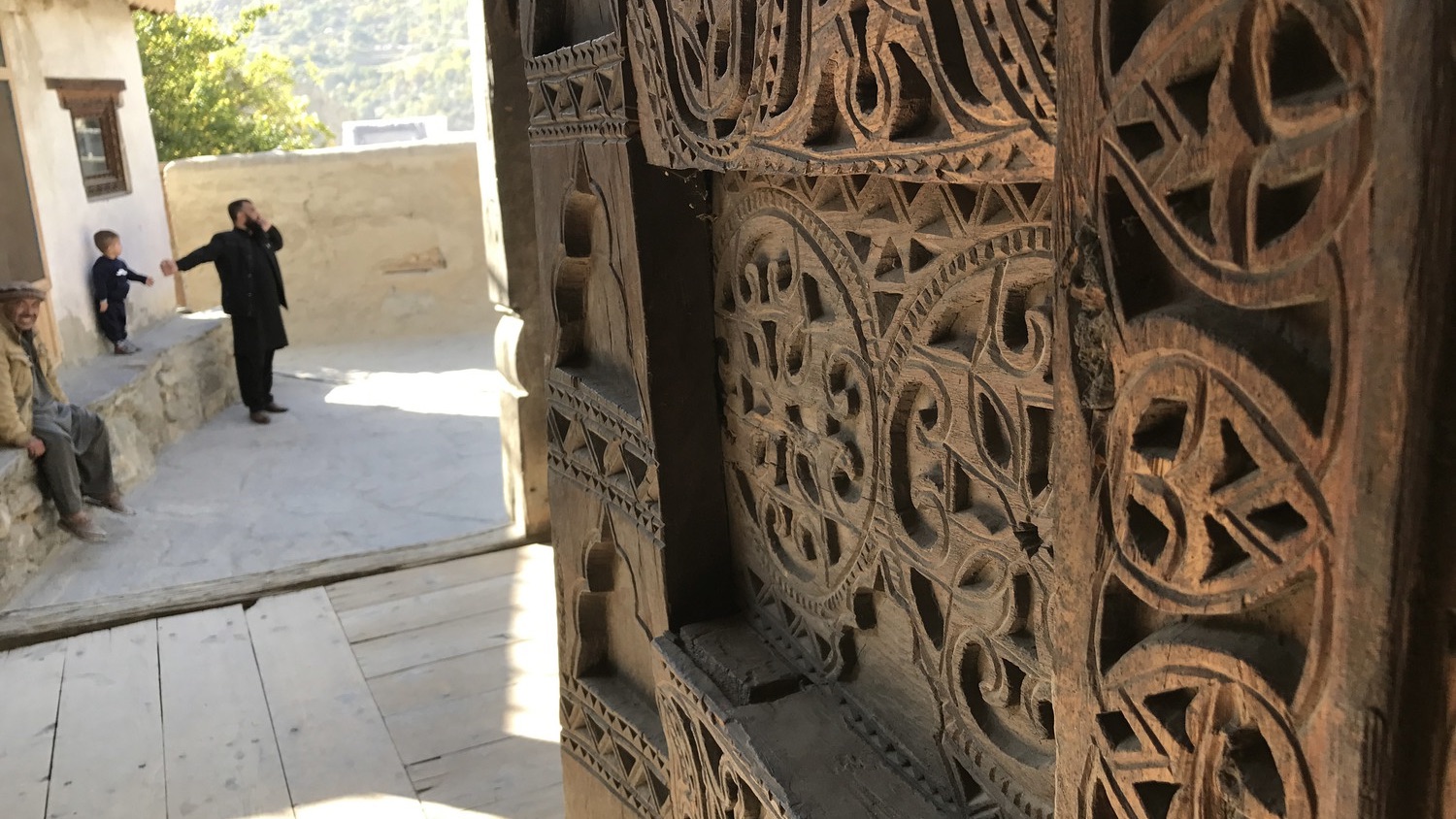
“We are standing in Ganish, a fortress along the Silk Road that is more than 1,000 years old and controlled a major trade artery that ran north-south from western China to India,” Salopek said in a video he recorded during a trip to northern Pakistan in 2017.
He spoke with The World’s Carolyn Beeler about his journey in Pakistan.
Carolyn Beeler: Tell us about your route across this mountainous region of northern Pakistan. The peaks are incredible. They seem totally impassable. How did you decide where to walk?
Paul Salopek: Yeah, I had no choice. I had no choice but to cross into India through Afghanistan, and that was through this really amazing corner of the world, Gilgit-Baltistan in northern Pakistan. Imagine Nepal, but it’s a place that most outsiders don’t know about. It’s got the highest concentration of 25,000-foot mountains in the world, including K2. It’s a low valley. That was the only bottleneck for me. I crossed a pass at about 16,000 feet to get from Afghanistan to the capital, Islamabad.
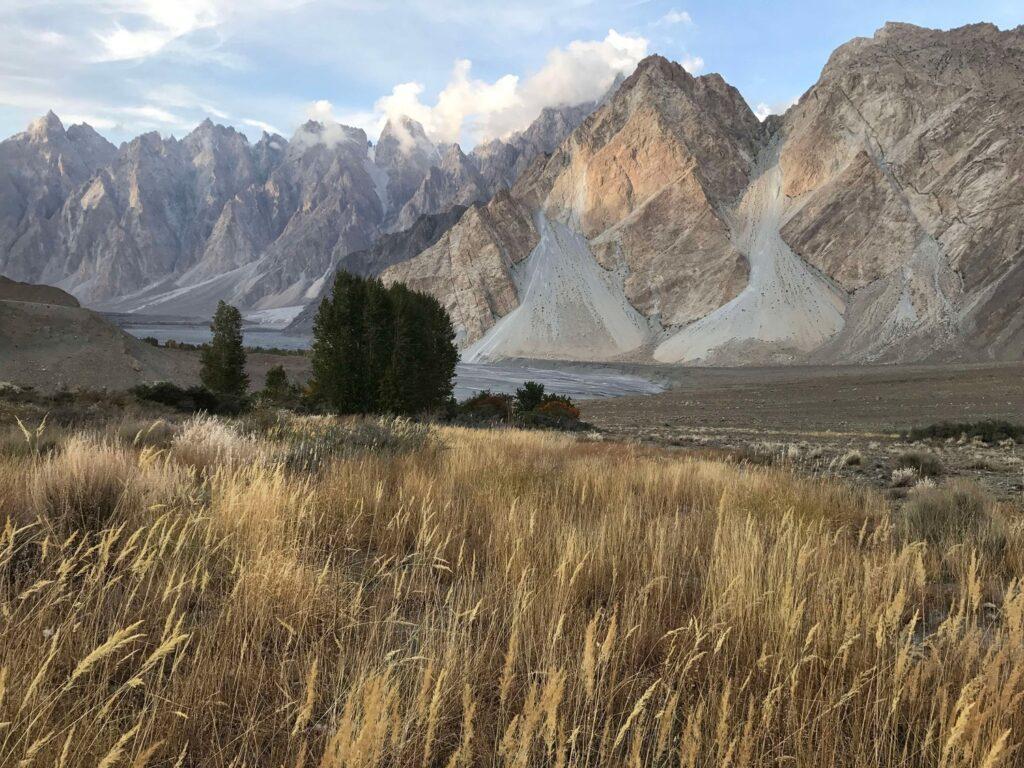
The region lies in northern Pakistan, near the border with China, and has thwarted conquerors from Alexander the Great to the Sikhs in the 19th century, the report says. For 900 years, part of the region was the independent kingdom of Hunza. Tell us about that kingdom.
It was a kind of small country, a mountain small country, a kind of medieval feudal kingdom. And it was a fortress, a place to stop invaders, but also, paradoxically, a crossroads. So it was part of the Silk Road, and they used it. They were a kind of middleman. It was a place where mule caravans went one way and went another way, carrying silk and porcelain and so on. And they got rich off of this. And that attracted the attention of imperialist powers, like China and, more recently, Britain. And they held out until 1974.
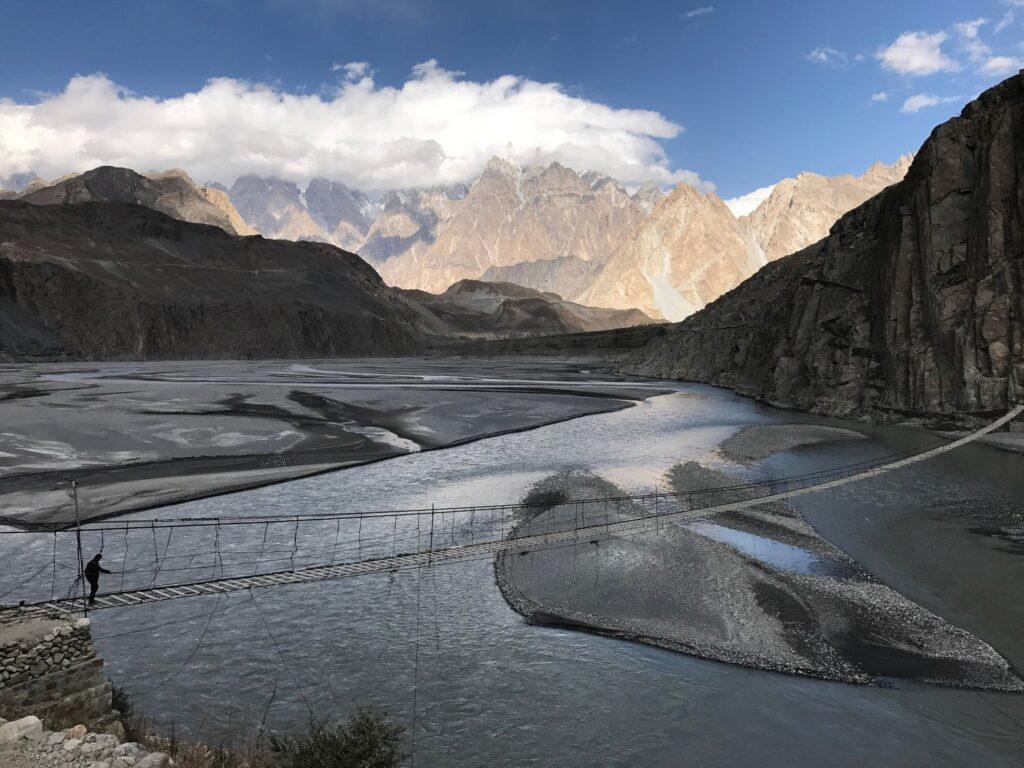
You posted a great photo of a footbridge crossing a river through the mountains while walking in the area. It looks so fun and a little scary to cross. Tell us about the people who live in the area and use the footbridge every day.
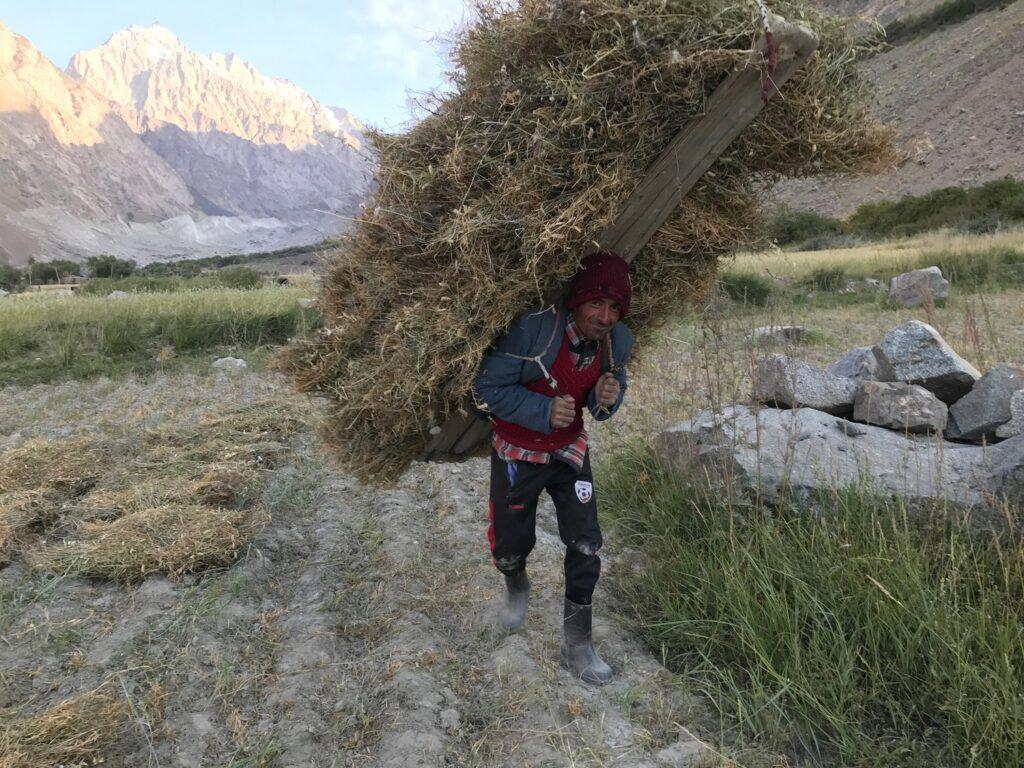
Oh, definitely here [someone with] Agoraphobia. If you’re afraid of heights, you might end up walking the whole area looking up instead of down. These footbridges span hundreds of yards over roaring glacial river gorges, and they’re used by local herders, who still push their yaks across these snowy fields. I met some guys hauling huge stacks of hay.
One couple you met was filmed lifting the heavy hay load you describe. In the video, you can see the man and woman struggling to lift huge bales of hay onto their backs, roughly twice the size of their bodies. They lie on the bales and then rock forward to stand up, repeating the movement seemingly thousands of times. Tell us about this couple.
They were in their 70s. As you described, these loads are the size of industrial refrigerators. I tried to lift them. You don’t see this in the video, but I said, “Hey, I just walked out of Africa, I’ve got a lot of experience. Let me swap my backpack with the one you’re carrying.” I couldn’t even get up off the ground. It takes some kind of acrobatic balance, rocking your body back and forth, to lift these loads off the ground. And this older woman, again, pushed me into the shadows.
One of the things that really struck me about what you wrote about this region was the local butter and how people preserve it for decades to use later. Can you tell me how you do that?
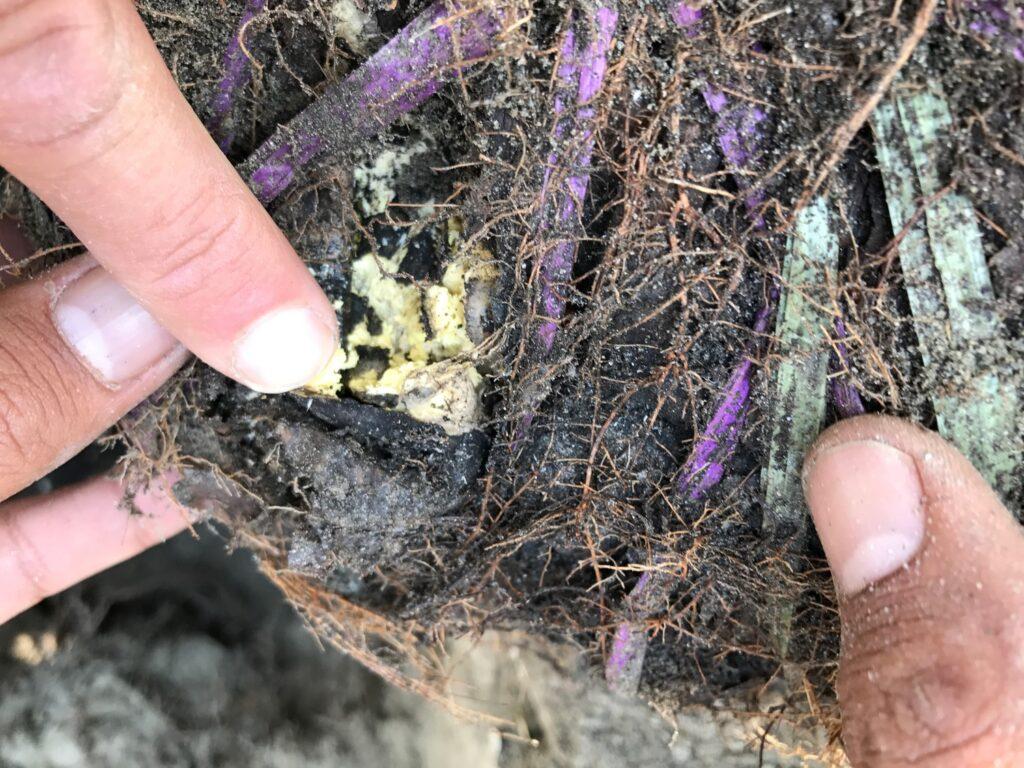
Yes, you’re talking about Maltash. The famous Maltash. Historically, there was no refrigeration in this area, so people learned to bury their dairy products underground. In this little village, they bury them under the central square. Every house has a paving stone, and in a sort of central square, there is a hole about two feet deep under the paving stone, and in it there is a block of butter wrapped in birch bark that has been there for 10 to 50 years. This is how they preserved the butter. As it aged, the butter became more flavorful, like wine. I tried tasting it, and it tasted like a sour candle.
So, did every household have a few bags of butter and just pull out the bag when they needed more butter?
Absolutely. It’s like a communal refrigerator that you walk on. And I said, “How do you know which paving stone is yours?” Because there’s nothing written on the paving stones. Imagine gray paving stones with weird shapes, diamond shapes. And they look at me like I’m crazy and say, “There’s no way you wouldn’t know which is your refrigerator.”
So we’ve been talking about how some of these communities are still quite isolated, but we’re hearing that the Karakoram Highway is connecting western China to Islamabad, the capital of Pakistan, and it’s bringing more tourism to the region, including the ancient villages that this highway passes through. What impact will that have on the people who live there?
Yes, this highway was there before, but it was expanded and widened by the Chinese. This highway project from Western China was one of the pioneering steps of China’s Belt and Road project. You may remember that about 10 years ago, China started a massive, almost global project of building communication and trade corridors from China to the rest of the world. This was kind of started in northern Pakistan. And in parallel with port improvements, building dams, upgrading them, laying fiber optic cables, etc., was the Karakoram Highway. What was once a long drive can now be reached in a day from the capital. This opens up this very isolated corner of the Himalayas to over 1.5 million tourists every year. These communities are living a golden age of tourism. But it’s taking a huge toll on the local ecosystem, with trash and the trampling of very delicate alpine wetlands. So I met a local government official who was Googling Nepal in the middle of the night to understand the problems in Nepal and wondering how to solve similar problems with overtourism in this part of northern Pakistan.
Portions of the interview have been edited for length and clarity.
Author and National Geographic Explorer Paul Salopek embarked on a 24,000-mile storytelling journey around the world called the Out of Eden Walk. The National Geographic Society, committed to revealing and protecting the world’s wonders, has funded Salopek and the project since 2013. Read more about the project here. Follow the journey @ X.Paul Salopek@Out of Fedden Walk Also, @National Geographic.
