


Shift towards imported hybrid seeds is shrinking Basmati acreage, weakening export capacity
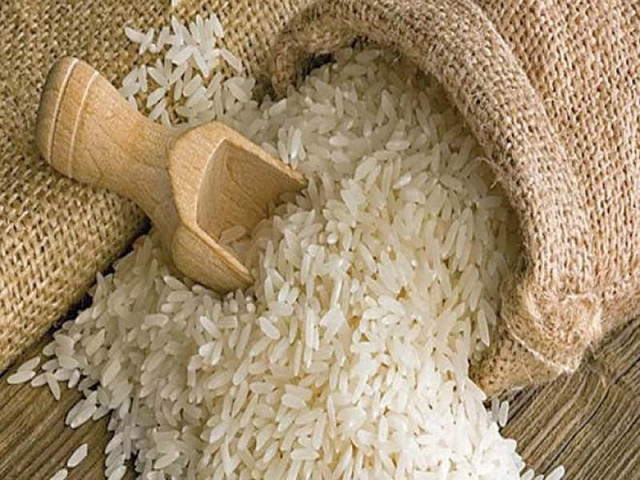
Basmati. Photo: Reuters (file)
ISLAMABAD:
A major structural change is quietly reshaping Pakistan’s rice economy – one with consequences far deeper than seasonal prices or export statistics suggest. Across Punjab, including traditional Basmati zones, Chinese hybrid rice is rapidly replacing open-pollinated varieties. What is often presented as progress driven by higher yields is, in reality, evolving into a serious policy failure with implications for food security, export sustainability and agricultural sovereignty.
Hybrid rice has spread rapidly beyond non-Basmati belts and is now encroaching upon prime Basmati lands. The effects are already visible. Pakistan’s Basmati export surplus is shrinking – not because international demand has weakened, but because domestic production is no longer keeping pace.
This contraction is not accidental. It is the result of land cannibalisation. Farmers, responding to short-term yield incentives, rising input costs and aggressive promotion by private hybrid suppliers, are shifting away from Basmati cultivation. While hybrids offer higher tonnage per acre, they do not compensate for Basmati’s strategic value.
Basmati remains Pakistan’s premium rice, protected by geography, tradition and international recognition. It anchors our rice exports in high-value markets and generates disproportionately higher foreign exchange compared to ordinary long-grain varieties. When Basmati acreage declines, export volumes cannot simply be replaced by bulk rice. The loss is structural, not temporary. Yet the implications of the hybrid surge extend beyond export composition into the foundations of food security itself.
Hybrid rice fundamentally alters the production model. Unlike open-pollinated varieties, hybrid seeds cannot be saved and replanted. Farmers must purchase fresh seed every season. In Pakistan’s case, these seeds are overwhelmingly imported from China. Only a marginal share is multiplied locally, and even that depends on foreign parental lines and proprietary technology. This introduces strategic vulnerability at the most critical point of agriculture: seed availability.
If, for geopolitical, maritime or logistical reasons, the Malacca Straits were disrupted, Pakistan’s hybrid seed supply would cease immediately. Without seed, planting cannot begin. Rice output would not decline gradually – it would stop abruptly.
This risk is magnified by the simultaneous erosion of indigenous seed stocks. As hybrids dominate acreage, open-pollinated varieties are no longer produced in quantities sufficient to cover national needs. Heirloom seeds that once ensured continuity across generations are quietly disappearing from commercial circulation.
Once this seed ecosystem collapses, reversal becomes nearly impossible. Seed multiplication takes years, not months. A country that today exports rice could find itself compelled to import it – not due to land scarcity or water shortages, but due to the absence of viable seed.
Globally, seed sovereignty is treated as a non-negotiable pillar of food security. No major rice-producing nation allows total dependence on imported hybrid seed. China itself maintains vast open-pollinated acreage. India aggressively protects its indigenous varieties. Vietnam balances hybrids with domestic breeding programmes and strategic seed reserves. Pakistan, alarmingly, has no comparable framework.
Instead of confronting this structural drift, recent policy responses have compounded it. The government’s decision to allocate Rs15 billion in export rebates to the rice sector reflects a fundamental misreading of the problem. Rather than addressing declining Basmati output, rising production costs, weak research capacity and distorted cropping patterns, the rebate compensates exporters for the consequences of policy neglect.
Exports have slowed – but not merely due to market conditions. They have slowed because the production strategy has weakened. Basmati supply has tightened. Costs have risen. Productivity improvements through research have stagnated. Rebates do not correct these failures. They merely conceal them temporarily. Public funds are thus used not to build capacity but to offset decline – rewarding inefficiency rather than restoring competitiveness. This approach creates dependency instead of resilience.
The contradiction is striking. Even as Basmati export surplus shrinks and seed dependency deepens, public investment in varietal research, domestic seed multiplication and preservation of open-pollinated stocks remains minimal. Agricultural research institutions continue to weaken, while private imported solutions increasingly dictate farmer decisions. Hybrid rice undoubtedly has a role. Yield improvement matters. Farmer incomes matter. But hybrids must complement – not replace – national seed security and export strategy. Without safeguards, diversification becomes dependence.
Allowing hybrids to cannibalise basmati lands, ignoring strategic seed vulnerability, and compensating the fallout through rebates reflect not policy coherence but policy drift.
If this trajectory continues, Pakistan may soon confront a bitter irony: fertile land, experienced farmers and global demand still intact – yet its inability to plant because the seeds must arrive from abroad. By then, Basmati acreage may have shrunk beyond recovery, indigenous varieties may exist only in research archives, and public money may still be spent subsidising decline rather than rebuilding capacity.
Nations do not lose food security overnight. They lose it gradually, through neglect disguised as reform.
The writer is a former VP, former board member of REAP, commodities & international trade expert
