


BEIJING, March 3 (Xinhua) — When China’s national lawmakers and political advisers gather in Beijing for the annual “two sessions,” one document will stand out: a draft 15th Five-Year Plan, the blueprint that will guide the world’s second-largest economy from 2026 to 2030.
Five-year plans have long been central to how China steers its development. But the upcoming plan is being closely watched not just for its economic ambitions, but for how a country of 1.4 billion people moves toward modernization amid technological disruption, demographic shifts, and an increasingly fractured global order.
The new plan is anchored in recommendations adopted by the Communist Party of China Central Committee in October 2025. It is designed to align with the long-term vision of achieving major progress by 2035 in economic strength, technological capacity, national defense and global influence, while lifting living standards to the level of mid-tier developed economies.
Public input was integral to the drafting process. A prime example was last year’s month-long online consultation, which drew more than 3.11 million submissions. Authorities stated that these contributions were reviewed and considered in the plan’s formulation. This inclusive approach served as a practical illustration of China’s whole-process people’s democracy.
China’s first five-year plan, launched in the early 1950s, came at a time when the country was still overwhelmingly rural and far from being industrialized. As China now is rolling out its 15th plan, the central goal remains unchanged: to build a modern socialist country.
Along the way, China has built one of the world’s most complete industrial systems, eliminated absolute poverty, grown into an economy of 140 trillion yuan (about 20.2 trillion U.S. dollars), and become a major trading partner for more than 150 countries and regions.
Though originating in the planned economy era, the five-year plans have evolved into an effective instrument that leverages the roles of both market and government for sound macroeconomic management.
These plans establish medium- to long-term objectives, define major priorities, and outline policy directions that steer national development. In practice, the market plays a decisive role, while the government is responsible for coordination and guidance.
In the book “China’s Megatrends,” American scholar John Naisbitt vividly described China’s planning approach as “framing the forest and letting the trees grow,” highlighting how the plans set broad national priorities while giving individual sectors and enterprises the freedom to develop in their own ways.
These dynamics have produced a set of distinct strengths in China’s system of medium- and long-term planning. Perhaps the most visible is its ability to marshal resources toward major national priorities.
This is especially important for a country like China, with a vast territory and significant regional disparities, where local authorities and ministries might pursue competing objectives. The five-year plans provide a common roadmap for policy, investment, and planning decisions across sectors and regions.
China’s campaign to end extreme poverty offers a concrete example of how national coordination works. The 13th Five-Year Plan (2016-2020) set a clear, time-bound target: all rural residents living below the then poverty line would be lifted out of poverty.
To that end, the plan laid out a detailed implementation framework. Initiatives included establishing an ongoing monitoring system to identify and assist poor households, mobilizing the state-owned sector to deliver aid, and channeling heavy investment into roads, housing and utilities in far-flung areas. More than 3 million officials were dispatched to villages to translate national targets into on-the-ground action.
Analysts said that such large-scale, tightly coordinated action would have been difficult without a centralized political leadership capable of setting priorities, mobilizing resources, and ensuring implementation across multiple layers of government.
The planning system also places a premium on foresight. In many countries, long-horizon issues, such as aging populations, energy transition, and industrial upgrading, are often crowded out by election-driven politics and short-term economic pressures.
China’s five-year and even longer-term plans are designed to counter that short-term drift. In the view of Chinese leaders, it is essential to begin with a well-defined plan and clear goals.
The focus on foresight draws on a long-standing Chinese tradition of valuing long-term planning. As the British scholar Martin Jacques has observed, the five-year plan resonates with a political culture that prioritizes thinking ahead over short-term gain.
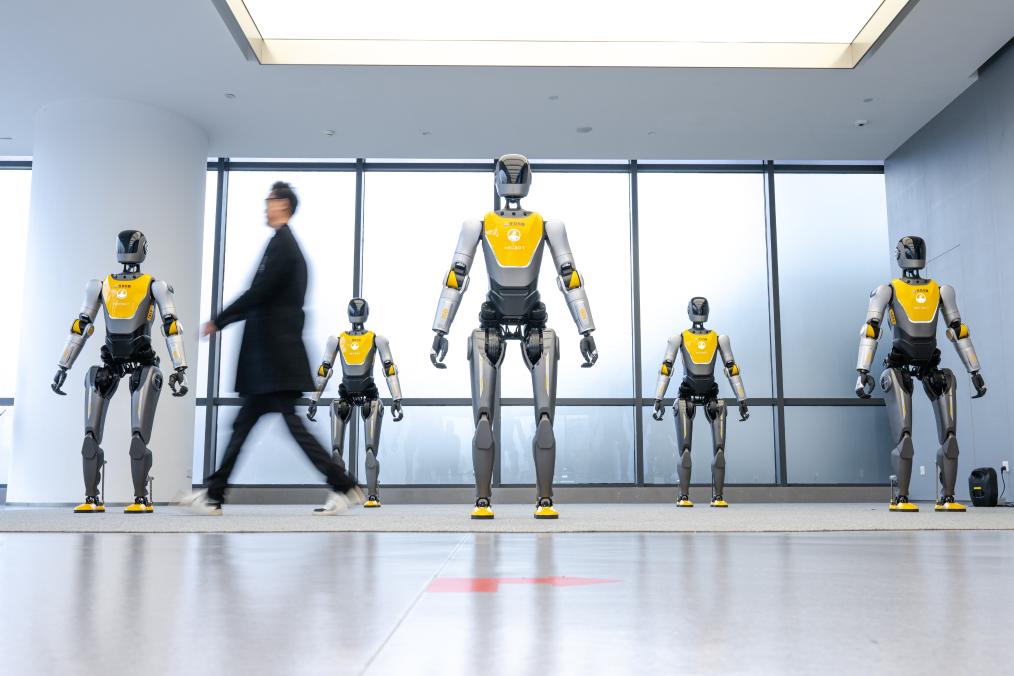
China’s push into artificial intelligence (AI) exemplifies this emphasis on foresight in practice. AI development was incorporated into national planning as early as the 13th Five-Year Plan a decade ago, a commitment that was followed by the release of a dedicated next-generation AI strategy in 2017.
By 2021, the technology had been elevated again, listed in the 14th Five-Year Plan as one of the country’s priority frontiers in science and technology. Proposals now for the new plan go further still, calling for an “AI Plus” approach that would weave the technology more deeply into the wider economy.
By 2025, China’s AI sector saw rapid growth. Companies were racing to develop large-scale AI models, the number of AI firms surpassed 6,000, and the core industry was projected to exceed 1.2 trillion yuan.
It is not just AI. The rapid growth of electric vehicles, solar power, lithium batteries, and 5G infrastructure also reflects the impact of long-term planning, particularly in areas that demand heavy upfront investment and patience, yet are crucial to sustaining technological and economic competitiveness.
Observers said that China’s approach seeks to anticipate and shape emerging trends before they fully take hold, while also managing potential risks.
Amid short-termism and global uncertainty, China’s five-year plans offer a rare form of strategic continuity. More than blueprints for development, they serve as a distinctive tool of governance.
Since the first plan in the 1950s, China has pursued the steady goal of becoming a modern country. Policies have evolved with circumstances, but the overall strategy has remained remarkably consistent.
Through a seamless policy-making relay, China has created a framework that allows major projects and reforms to advance steadily over time.
For businesses and investors, this predictability matters. Long-term decisions depend less on temporary incentives than on the policy environment that can be anticipated. Five-year plans reduce the risk of sudden shifts and provide a measure of stability for the broader economy.
That continuity is set to be reinforced through legislation, as the National People’s Congress (NPC) prepares to review a draft law governing national development planning, aimed at bringing greater consistency to how plans are drawn up and enforced.
China’s five-year plans are formulated through a carefully structured, multi-stage process. Recommendations begin at the Party’s plenary sessions, followed by a draft plan prepared by the State Council, and finally reviewed and approved by the NPC before being released.
Once national priorities are set, local and specialized plans break them down into concrete steps to ensure they are carried out effectively.
Analysts said the planning system offers insight into how China’s institutions sustain policy continuity and carry out complex initiatives effectively, even amid a rapidly changing global environment.
“China’s five-year plans are a fully integrated system for turning goals into reality,” said Dong Yu, executive vice dean of the Institute of China Development Planning at Tsinghua University. ■
