


PUBLISHED
March 29, 2026
KARACHI:
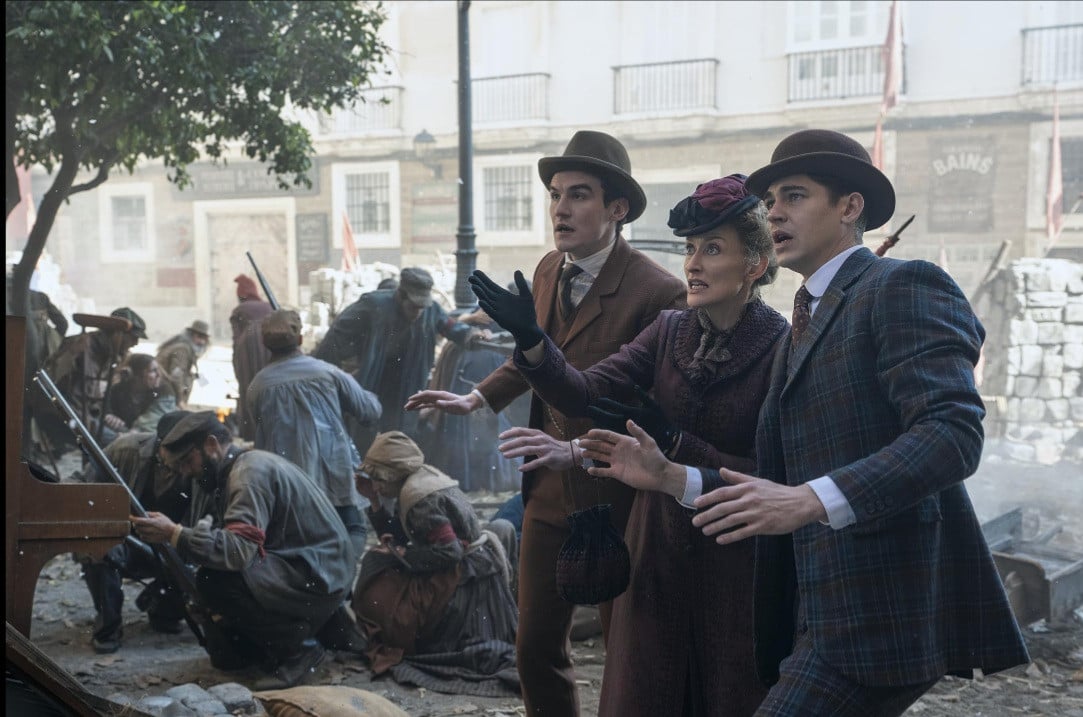
There are two kinds of people in this world – those who love Sherlock Holmes, and those who don’t. Guy Ritchie tries to fit into both categories by first appealing to the former with Young Sherlock and then crafting a blend of Indiana Jones and James Bond to keep it relevant. Sadly, he fails to appease Sherlock Holmes lovers; however, those for whom 221B Baker Street means nothing might develop an interest in the character.
Why doesn’t this version of Sherlock Holmes manage to become popular despite the presence of Guy Ritchie, who made the two Sherlock Holmes films featuring Robert Downey Jr? Ritchie himself is to blame. Nobody criticised him for the RDJ Sherlock Holmes because the actor was on a roll and audiences wanted a Sherlock Holmes film. Here, however, neither is the lead actor popular, nor does he resemble the character who went on to become the world’s first consulting detective.
Also, Sir Arthur Conan Doyle’s creation appeared in 56 short stories and just four novels, making the shorter format more successful. However, with four subplots and one central narrative, Young Sherlock tries to play a longer innings and fails. Not only does it fail to honour the character that British actors Jeremy Brett and Benedict Cumberbatch made famous on TV, but it also doesn’t even pay tribute to Andrew Lane’s eight-book Young Sherlock Holmes series, which became a huge hit in the UK and the US between 2010 and 2015.
From the outside, the Amazon Prime series looks like the perfect introduction for youngsters, with the potential to reinvent a literary icon for a new generation—but instead, it loses itself in excess. The show might have fared better had it adapted one of the Young Sherlock Holmes novels for its OTT debut. Instead, creator Matthew Parkhill and director Guy Ritchie take the character in a direction that feels more indulgent than inspired. The result is a series that struggles to balance its ambitions with coherence.
Although Lane’s books—sanctioned by the estate of Arthur Conan Doyle—offered a grounded exploration of Holmes’ formative years, their transition into a high-budget series aimed at adults feels uneasy at best. The show asks viewers to juggle multiple underdeveloped plotlines across eight episodes, with storytelling often taking a backseat to flashy action set pieces. Compounding the issue, the relatively inexperienced lead cast fails to elevate the material, resulting in performances that feel more like approximations than fully realised characters.
The plot
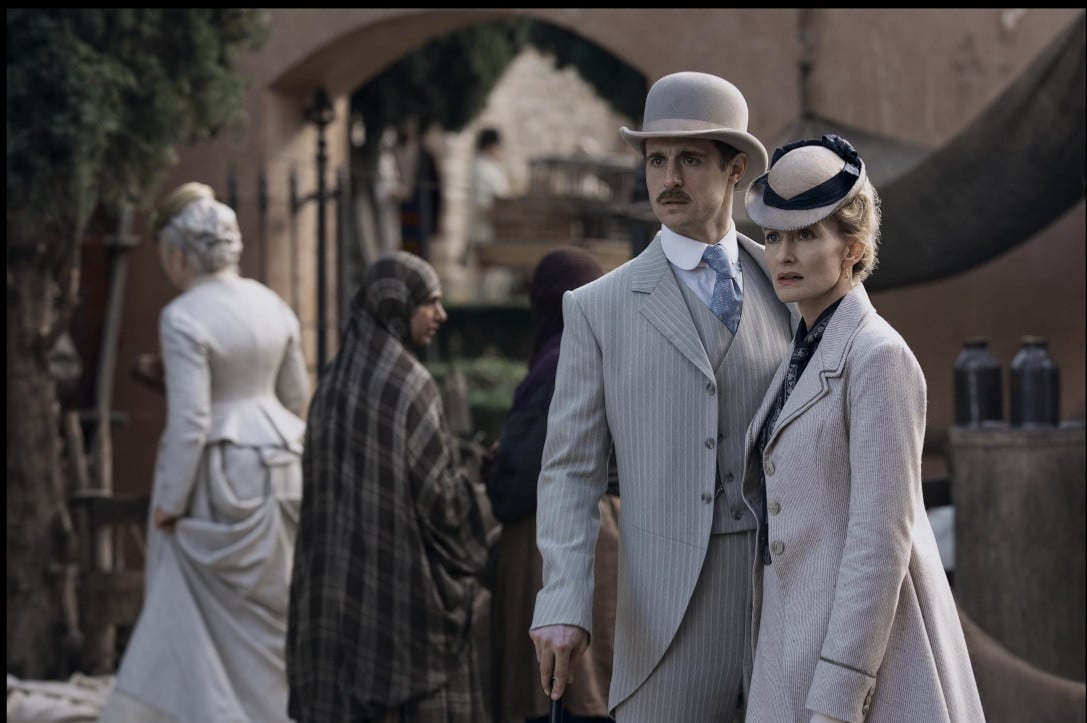
Set in a vaguely defined late-19th-century England, the series introduces a 19-year-old Sherlock Holmes (Hero Fiennes Tiffin) as an insolent young man languishing in Newgate Prison. His fortunes change when his older brother Mycroft (Max Irons) secures his release and arranges for him to go to Oxford—not as a student, but as a porter.
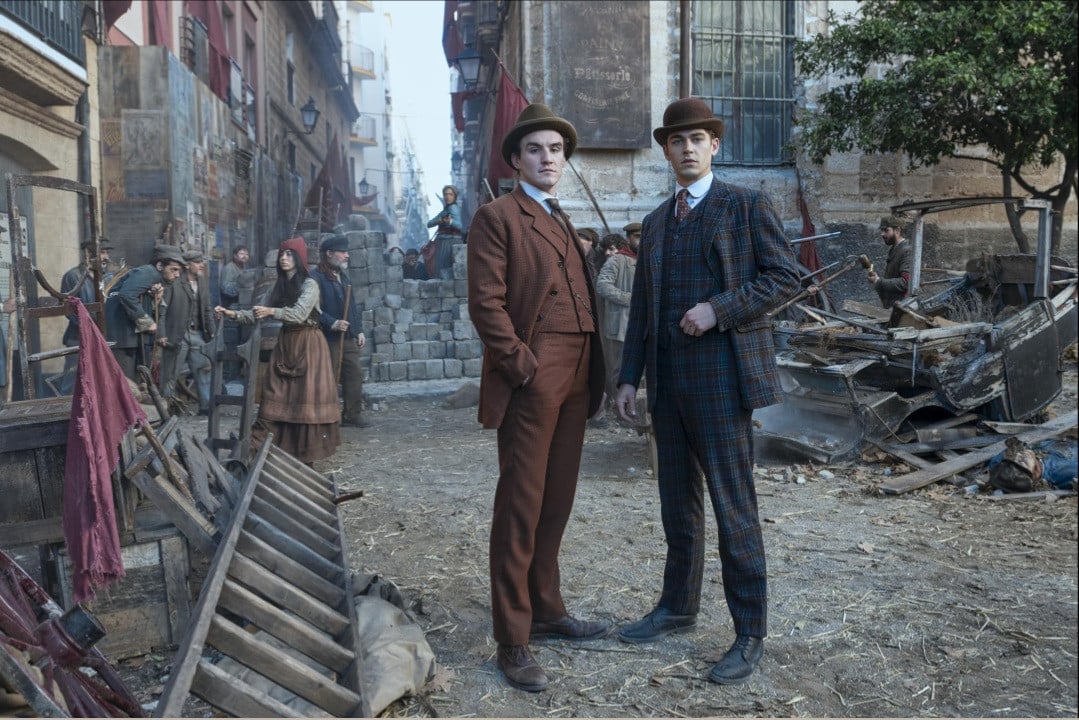
Sherlock is portrayed as an impulsive youngster with a troubled family history—his mother (Natascha McElhone) is institutionalised, his father (Joseph Fiennes) is largely absent, and there is the lingering trauma of a deceased sister. Enter James Moriarty (Dónal Finn), who is more inclined towards physical confrontation than Holmes’ intellectual sparring. The two young men form a bond—until the arrival of a Chinese princess (Zine Tseng).
Things go sideways once a professor is murdered, an important document is stolen, and Holmes is accused of being behind both. From meeting Inspector Lestrade to escaping prison to clear his name, Holmes uses his deductive abilities to solve the crimes that come his way—each more horrific than the last. Hovering over this already crowded narrative is the shady past of one of the central characters and the arrival of Sir Bucephalus Hodge (Colin Firth), whose colonial ambitions add yet another layer to the plot.
The good
Since it’s a Sherlock Holmes adaptation, it is bound to attract the attention of those who have grown up reading his adventures. Everything from the costumes to the production design has been executed convincingly—so much so that even Sir Arthur Conan Doyle might have approved. The early episodes, particularly those directed by Guy Ritchie, exhibit an energy that keeps viewers engaged.
Some of the interactions with future characters are handled subtly, hinting at Sherlock’s future addictions, the beginnings of his rivalry with Moriarty, and his interaction with Inspector Lestrade, who isn’t yet part of Scotland Yard.
The pace of each episode is brisk, which is one of the reasons the series doesn’t become boring. Questions such as how Sherlock developed his interest in deduction, the reason behind his mother’s illness, and how his elder brother entered government service are addressed, albeit briefly.

The bad
What is confusing is that after the first two episodes, both the director and the direction change, and all the promising elements that viewers were waiting for are pushed to the final two episodes. By Sherlock Holmes standards, that is simply too late.
Secondly, a major question arises: what exactly is this series a prequel to? If it is a prequel to Sir Arthur Conan Doyle’s novels, then much of it is inaccurate. Moriarty didn’t appear until the last story of The Memoirs of Sherlock Holmes, and Holmes’ sister was hardly ever mentioned. If it is a prequel to Guy Ritchie’s stylised adaptations that should have been clearly stated. Instead, it appears to be a reimagining of sorts—without committing fully to that idea.
Then there is the claim of being ‘inspired by Lane’s novels’, which doesn’t hold up. The events in the show do not align with those in the books. Even the lead actor, Hero Fiennes Tiffin, doesn’t resemble either Jeremy Brett—the definitive Sherlock Holmes—or Robert Downey Jr, which may confuse viewers familiar with previous portrayals.
The dynamic between Sherlock and Moriarty appears heavily influenced by Smallville, where Clark Kent and Lex Luthor begin as allies. However, this reinterpretation lacks the emotional depth required to make such a relationship compelling. Moriarty is written as an exaggerated mirror of Sherlock—louder and brasher, but ultimately less interesting.
It would have been wise to introduce Dr Watson, as was done in Young Sherlock Holmes in the 1980s. However, it seems Guy Ritchie isn’t particularly fond of the Barry Levinson classic, which explored Sherlock’s origins more effectively than this adaptation. Watson provided balance to Holmes in the original stories, and his absence is keenly felt here.
The verdict
Why was Sherlock Holmes so averse to romantic relationships? What made him choose the profession of a consulting detective? Who mentored him into becoming the man that even James Moriarty would later fear? Did he return to Oxford to complete his education and become the man his brother Mycroft expected him to become? Who knew about the conspiracy that drove his mother insane, and what happened to her after the first season?
If you are looking for answers to these questions, you will not find them here. This season of Young Sherlock Holmes feels like a Guy Ritchie project made primarily for Guy Ritchie. Had he considered the audience more carefully, he might have refined it further—or even made it into a film rather than a sprawling TV series that portrays the Holmes family as unnecessarily shady.
For Sherlock Holmes fans, anything remotely connected to the detective is bound to spark interest. However, the makers of Young Sherlock should not take that as blanket approval as they move towards a second season. Their experiment needs recalibration. The focus should shift back to the character rather than his rivalry with Moriarty. Before Moriarty becomes significant, Holmes himself must evolve into the formidable figure that criminals fear—something this series fails to establish.
It would be advisable to consult Andrew Lane for future seasons, as he represents the closest link to a faithful interpretation of young Sherlock Holmes. His eight novels provide ample material for multiple seasons—but only if adapted with care. Otherwise, continued overindulgence may result in yet another forgettable adaptation, pushing audiences further away from future interpretations of the character.
For now, Young Sherlock stands as a curious misfire—ambitious in scope, but uncertain of its own identity.
Ultimately, Young Sherlock Holmes suffers from the classic pitfall of trying to please too many audiences at once. In an attempt to capture both longtime fans of the detective and a younger, action-oriented demographic, the series dilutes what makes Sherlock compelling: his intellect, his keen observation, and the quiet intensity that has defined him for more than a century. Instead, what we get is a caricatured version of the detective, caught between being a brooding genius and a swaggering action hero. The series’ overemphasis on spectacle and convoluted subplots undermines its own potential, leaving viewers with a fragmented experience that neither excites nor satisfies fully.
Moreover, the tonal inconsistencies across episodes reflect a lack of clear creative direction. With Ritchie at the helm for only a portion of the series, the energy he injects in the early episodes is abruptly replaced by a more conventional, and at times lethargic, style in the later ones. This unevenness disrupts the narrative rhythm, making it difficult for viewers to invest emotionally in Sherlock’s journey. The absence of familiar companions, like Dr Watson, and the overcomplicated inclusion of family scandals and romantic subplots further obscures the detective’s formative story.
There remains, however, a silver lining: the series demonstrates that the appetite for Sherlock Holmes stories is undiminished. With better alignment between source material, character portrayal, and audience expectations, there is real potential for a revitalised exploration of Holmes’ early years. Future seasons could regain focus by centering on Sherlock’s development as a detective, his intellectual growth, and the subtle, psychological nuances that Lane’s novels so effectively captured.
For now, Young Sherlock Holmes stands as a cautionary tale in adaptation: ambition without clarity risks eroding the essence of a beloved character. It is a project that, despite its lavish production and high-profile names, reminds us that fidelity to the core of a character—and respect for the intelligence of the audience—remains the true key to lasting success.
All facts and information are the sole responsibility of the writer.
Omair Alavi is a freelance contributor who writes about film, television, and popular culture
