

Close Menu
Nabka News
  • Home
  • News
  • Business
  • China
  • India
  • Pakistan
  • Political
  • Tech
  • Trend
  • USA
  • Sports

Subscribe to Updates

Subscribe to our newsletter and never miss our latest news

Subscribe my Newsletter for New Posts & tips Let's stay updated!

What's Hot

Rs200m worth of liquor seized in joint maritime operation

April 14, 2026

Erdogan did not say Turkiye would have attacked Israel if Pakistan wasn’t mediating US-Iran talks

April 14, 2026

U.S. blockade of Strait of Hormuz — sustainability and consequences-Xinhua

April 14, 2026
Facebook X (Twitter) Instagram
  • Home
  • About NabkaNews
  • Advertise with NabkaNews
  • DMCA Policy
  • Privacy Policy
  • Terms of Use
  • Contact us
Facebook X (Twitter) Instagram Pinterest Vimeo
Nabka News
  • Home
  • News
  • Business
  • China
  • India
  • Pakistan
  • Political
  • Tech
  • Trend
  • USA
  • Sports
Nabka News
Home » U.S. blockade of Strait of Hormuz — sustainability and consequences-Xinhua
China

U.S. blockade of Strait of Hormuz — sustainability and consequences-Xinhua

i2wtcBy i2wtcApril 14, 2026No Comments5 Mins Read
Share Facebook Twitter Pinterest LinkedIn Tumblr Email WhatsApp Copy Link
Follow Us
Google News Flipboard Threads
Share
Facebook Twitter LinkedIn Pinterest Email Copy Link


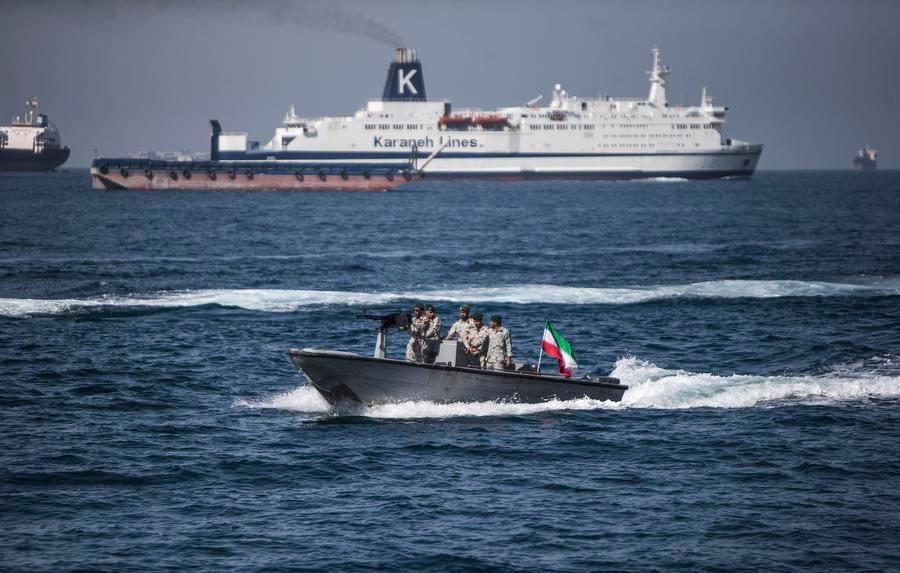
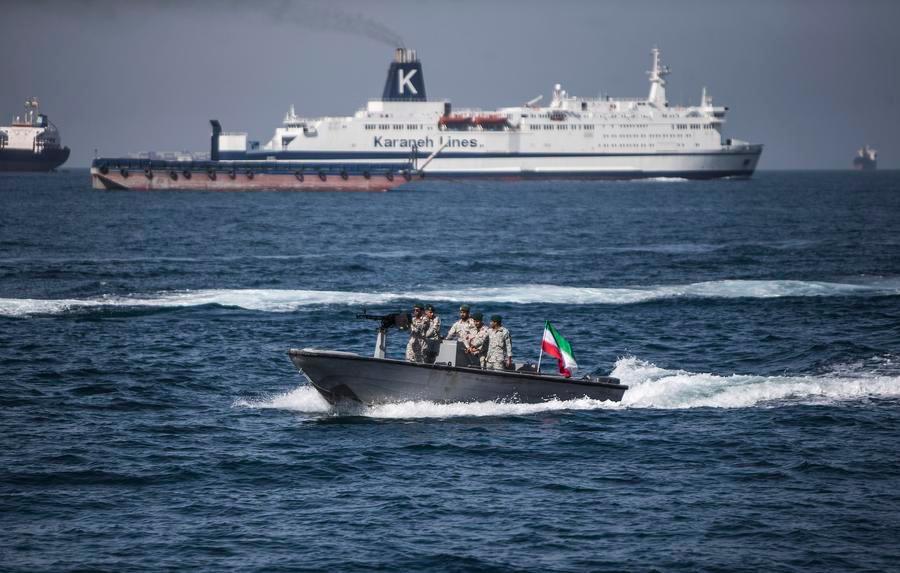
Iranian soldiers patrol the Strait of Hormuz in southern Iran, April 30, 2019. (Xinhua/Ahmad Halabisaz)

CAIRO, April 13 (Xinhua) — After negotiations with Iran failed to yield any agreement, the United States took drastic measures on Monday by blocking the Strait of Hormuz, a crucial artery for the global energy market.

Experts say that, given the complexity of the strait and the potential blowback to U.S. own interests, a full blockade may be difficult to sustain. Nevertheless, this “reckless move” could further disrupt the global economy and heighten the risk of renewed regional conflict.

“RECKLESS MOVE”

After U.S. President Donald Trump threatened on Sunday to block ships attempting to enter or leave the Strait of Hormuz, U.S. Central Command said that U.S. forces will begin implementing a blockade of “all maritime traffic entering and exiting Iranian ports” on Monday at 10 a.m. Eastern Time (1400 GMT).

In accordance with Trump’s proclamation, the blockade will be enforced “impartially” against vessels of all nations entering or departing Iranian ports and coastal areas, including “all Iranian ports on the Arabian Gulf and Gulf of Oman,” according to the statement.

On Monday afternoon, the U.S. blockade of the Strait of Hormuz came into effect.

In a press conference following the blockade, Trump warned that the U.S. military will “eliminate” any Iranian ship if it comes close to the U.S. blockade in the Strait of Hormuz.
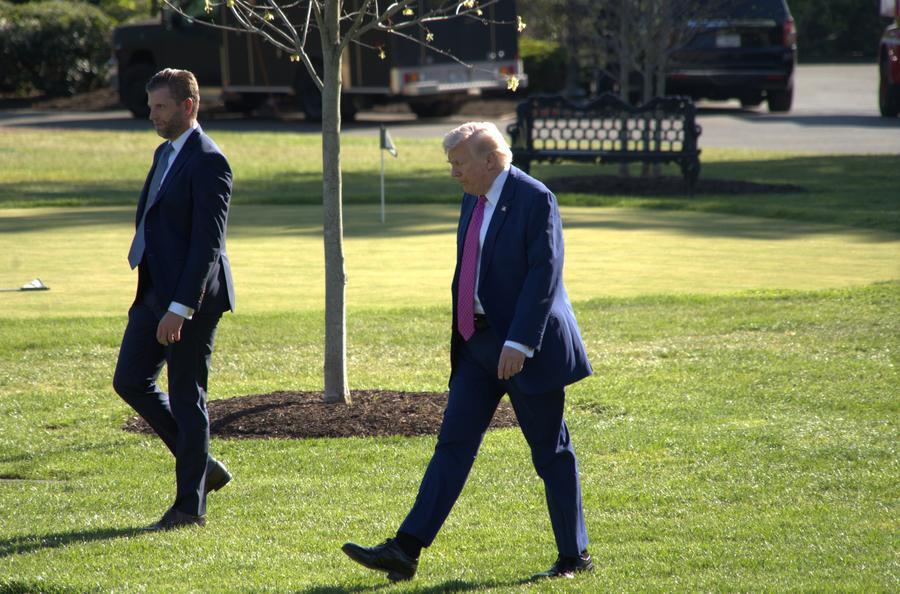
U.S. President Donald Trump (R) walks toward Marine One at the White House in Washington, D.C., the United States, on April 10, 2026. (Photo by Li Yuanqing/Xinhua)

The blockade adds yet another hurdle to a globally vital shipping route already battered by the U.S.-Israel-Iran conflict.

U.S. blockade of the Strait of Hormuz “is not just a geopolitical escalation but a reckless move that risks choking the global economy, with American consumers bearing the brunt,” Iranian semi-official Tasnim news agency opined on Monday.

UNSUSTAINABLE BLOCKADE

While the United States seeks to pressure Iran by blocking the strait to secure concessions on issues such as the reopening of Hormuz, experts say that a full blockade is unlikely to be either feasible or sustainable.

The United States is likely to rely on enhancing its naval presence, intensifying monitoring and inspection operations, and possibly imposing “selective restrictions” on the movement of certain vessels, said Abdulaziz Alshaabani, a Saudi researcher at Al Riyadh Center for Political and Strategic Studies.

“However, it is unlikely that the naval blockade would be complete or absolutely effective, given the complexities of maritime routes and the entanglement of international interests,” Alshaabani added.

Mohammed Al-Jubouri, a professor at al-Iraqia University in Baghdad, echoes Alshaabani’s assessment.

“Iran does not need to engage the U.S. fleet directly to undermine the blockade,” Al-Jubouri said. “It suffices for Tehran to employ tactics involving fast-attack craft, naval mines, coastal missile batteries, or even proxy attacks in other parts of the region. Such tools are capable of transforming any blockade into a prolonged war of attrition.”
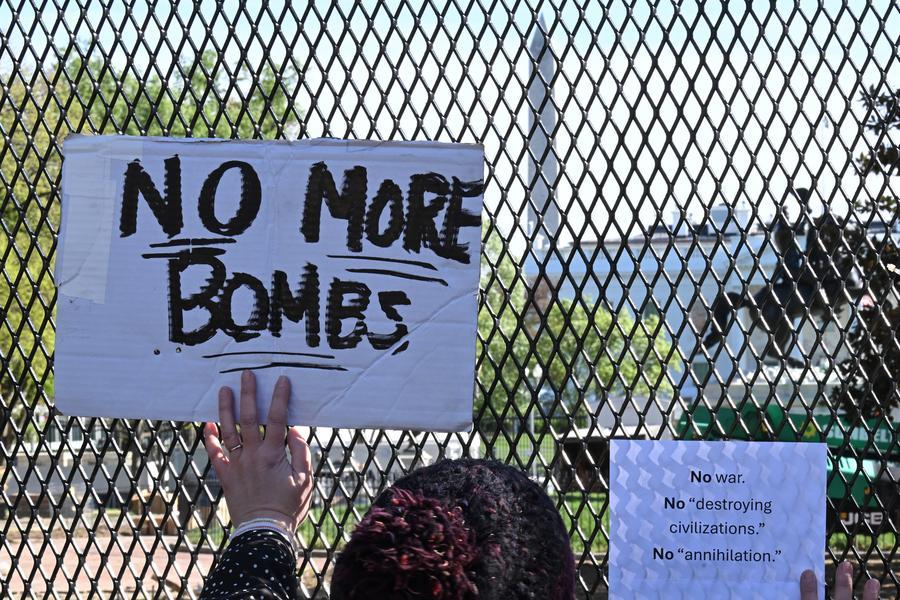
A demonstrator holds placards in front of the White House in Washington, D.C., the United States, on April 7, 2026. (Xinhua/Li Rui)

Abu Bakr al-Deeb, an advisor at the Cairo-based Arab Center for Research and Studies, argues that a complete blockade could end up shooting the United States in the foot, ultimately working against its own interests.

“The United States can impose temporary or partial control, but it would face immense difficulty in transforming that control into a stable, long-term blockade without incurring significant political and economic costs,” he added.

FAR-REACHING IMPACT

Even if a long-term blockade may be beyond Washington’s reach, the move is sure to send additional shockwaves through a global energy market already roiled by ongoing U.S.-Iran tensions and could further jeopardize the fragile ceasefire between the United States, Israel and Iran, raising the risk of renewed conflict.

A blockade of a strait as vital as Hormuz cannot remain a “purely American affair” in terms of its impact, al-Deeb said, adding, “The global economy — particularly Asia and Europe — would suffer immediate and direct harm.”

Following the outbreak of the U.S.-Israel-Iran conflict on Feb. 28, Brent Crude oil prices have already soared, reaching highs of over 120 U.S. dollars per barrel by early April.

Oil could rise to 150 dollars a barrel under a U.S. blockade of the Strait of Hormuz, Jorge Montepeque, managing director at Britain-based Onyx Capital Group, told Bloomberg.
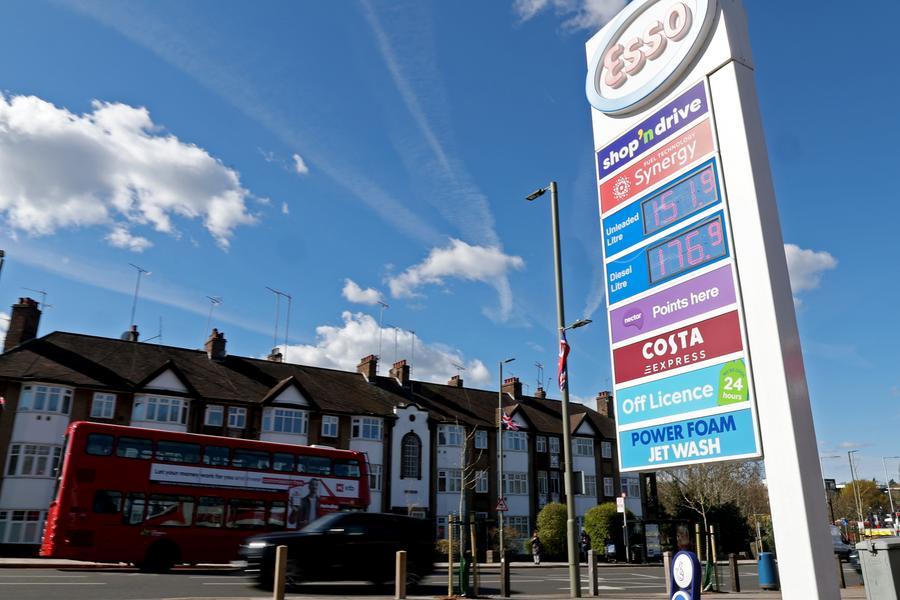
Gas prices are displayed at a petrol station in London, Britain, March 26, 2026. The strikes launched by the United States and Israel against Iran have triggered a sharp spike in global oil prices. (Xinhua/Li Ying)

The U.S. blockade is also believed to raise the risk of hostilities reigniting between Washington and Tehran, potentially undermining the ceasefire that was just agreed upon last week.

“The U.S. insistence and lack of flexibility regarding navigation in the Strait of Hormuz … reveals Washington’s intention to use these issues as a pretext for launching further strikes and attacks,” said Al-Jubouri.

Iran’s Islamic Revolution Guards Corps (IRGC) has vowed to use new military capabilities if the war with the United States and Israel continues.

“We have not yet used our capabilities, and if the war continues, we will unveil capabilities that the enemy has no idea about,” IRGC spokesperson Hossein Mohebbi said after the U.S. blockade took effect.  ■


Source link

Share. Facebook Twitter Pinterest LinkedIn Tumblr Email WhatsApp Copy Link
i2wtc
  • Website

Related Posts

China

China’s EV makers accelerate push into chips, AI amid global cooperation-Xinhua

April 14, 2026
China

Expo offers global companies gateway to China’s huge consumer market-Xinhua

April 13, 2026
China

Chinese scientists discover new way to strengthen rice resistance against devastating disease-Xinhua

April 13, 2026
China

Urban renewal project promoted in China’s Fujian amid ecological protection efforts-Xinhua

April 13, 2026
China

China’s “Su Super League” roars back ahead of World Cup fever-Xinhua

April 13, 2026
China

At Melbourne Motor Show, Chinese new energy vehicles win attention beyond fuel savings-Xinhua

April 13, 2026
Add A Comment
Leave A Reply Cancel Reply

Top Posts

House Republicans unveil aid bill for Israel, Ukraine ahead of weekend House vote

April 17, 2024

Prime Minister Johnson presses forward with Ukraine aid bill despite pressure from hardliners

April 17, 2024

Justin Verlander makes season debut against Nationals

April 17, 2024

Tesla lays off 285 employees in Buffalo, New York as part of major restructuring

April 17, 2024
Don't Miss

Trump says China’s Xi ‘hard to make a deal with’ amid trade dispute | Donald Trump News

By i2wtcJune 4, 20250

Growing strains in US-China relations over implementation of agreement to roll back tariffs and trade…

Donald Trump’s 50% steel and aluminium tariffs take effect | Business and Economy News

June 4, 2025

The Take: Why is Trump cracking down on Chinese students? | Education News

June 4, 2025

Chinese couple charged with smuggling toxic fungus into US | Science and Technology News

June 4, 2025

Subscribe to Updates

Subscribe to our newsletter and never miss our latest news

Subscribe my Newsletter for New Posts & tips Let's stay updated!

About Us
About Us

Welcome to NabkaNews, your go-to source for the latest updates and insights on technology, business, and news from around the world, with a focus on the USA, Pakistan, and India.

At NabkaNews, we understand the importance of staying informed in today’s fast-paced world. Our mission is to provide you with accurate, relevant, and engaging content that keeps you up-to-date with the latest developments in technology, business trends, and news events.

Facebook X (Twitter) Pinterest YouTube WhatsApp
Our Picks

Rs200m worth of liquor seized in joint maritime operation

April 14, 2026

Erdogan did not say Turkiye would have attacked Israel if Pakistan wasn’t mediating US-Iran talks

April 14, 2026

U.S. blockade of Strait of Hormuz — sustainability and consequences-Xinhua

April 14, 2026
Most Popular

Xi visits IT innovation park in Beijing-Xinhua

February 9, 2026

Chinese steel mill in Zimbabwe opens furnaces for ‘nation building’

June 22, 2024

Xi extends Chinese New Year greetings to ring in Year of Horse-Xinhua

February 14, 2026
© 2026 nabkanews. Designed by nabkanews.
  • Home
  • About NabkaNews
  • Advertise with NabkaNews
  • DMCA Policy
  • Privacy Policy
  • Terms of Use
  • Contact us

Type above and press Enter to search. Press Esc to cancel.